Aluminum anodizing is an electrochemical treatment that converts the metal's surface into a hard, protective oxide layer. There are three standardized types (Type I chromic, Type II sulfuric, Type III hard or hardcoat), which differ in thickness, hardness, colour and wear resistance depending on the intended use.
Aluminum anodizing is one of the most widely used surface treatments in metal fabrication, yet its terminology remains unclear for many buyers. Type I, Type II, Type III, hardcoat, coating thickness, colouring: each parameter directly affects the final performance of the part.
Understanding these differences prevents costly mistakes, such as specifying a decorative finish for a part exposed to abrasion. This technical guide breaks down the types, hardness levels, colours and uses, then helps you select the right treatment for an industrial, aerospace or architectural project.
How aluminum anodizing works
Anodizing is an electrochemical conversion, not an applied coating. The aluminum part acts as the anode in an electrolytic bath: the current causes a dense oxide layer to grow directly from the metal. About half of this layer grows into the substrate and the other half outward, creating an integral bond that cannot chip or peel.
This oxide layer is naturally porous. It is precisely this porosity that allows dyes to be absorbed, before the layer is sealed to lock in the protection. The alloy plays a major role: 5000 and 6000 series grades, very common in custom aluminum fabrication, respond well, while alloys high in copper or silicon present more constraints.
The three types of anodizing: Type I, Type II and Type III
The reference standard classifies the treatment into three main families, distinguished by their electrolyte, thickness and function.
Type I: chromic acid anodizing
Type I uses a chromic acid bath and produces the thinnest layer. Historically favoured in industry, it better preserves the metal's fatigue strength and is used in particular for crack detection and surface preparation before bonding, an advantage for aluminum parts for the aerospace industry.
Type II: sulfuric acid anodizing
Type II, performed in sulfuric acid and then sealed, is the most common process. It combines good corrosion resistance with excellent dye uptake, making it the default choice for most decorative and general protection applications.
Type III: hard anodizing or hardcoat
Type III, also known as hardcoat on aluminum, stands out for its thick and very hard layer. For Type III hardcoat anodizing as defined by MIL-A-8625, the sulfuric acid bath is held near 0 °C with high current, producing a coating that can exceed 50 microns with a hardness of 60 to 70 on the Rockwell C scale.
| Type | Electrolyte | Thickness | Main resistance | Typical use |
|---|---|---|---|---|
| Type I | Chromic acid | Very thin | Preserves fatigue strength | Aerospace, bonding, crack detection |
| Type II | Sulfuric acid and sealing | Thin | Corrosion and colouring | General use, decorative |
| Type III | Cold sulfuric acid, high current | Thick | Wear and abrasion | Heavy-duty mechanical, military |
Hardness, thickness and wear resistance
Hardness is the key selling point of hardcoat on aluminum. A well-executed Type III finish offers abrasion resistance superior to that of several hard coatings such as chrome or nickel, while also improving the part's thermal resistance.
Thickness is selected according to the intended function. A coating designed for wear is often left unsealed to retain maximum hardness, while a coating focused on corrosion is sealed. This trade-off between wear and corrosion must be settled at the design stage, in connection with the joining process: for a component assembled by TIG welding of aluminum, heat-affected zones must be taken into account.
Several factors determine the final performance of the treatment:
- the base alloy and its temper;
- the desired coating thickness;
- sealing or the lack of it;
- whether or not the part is coloured.
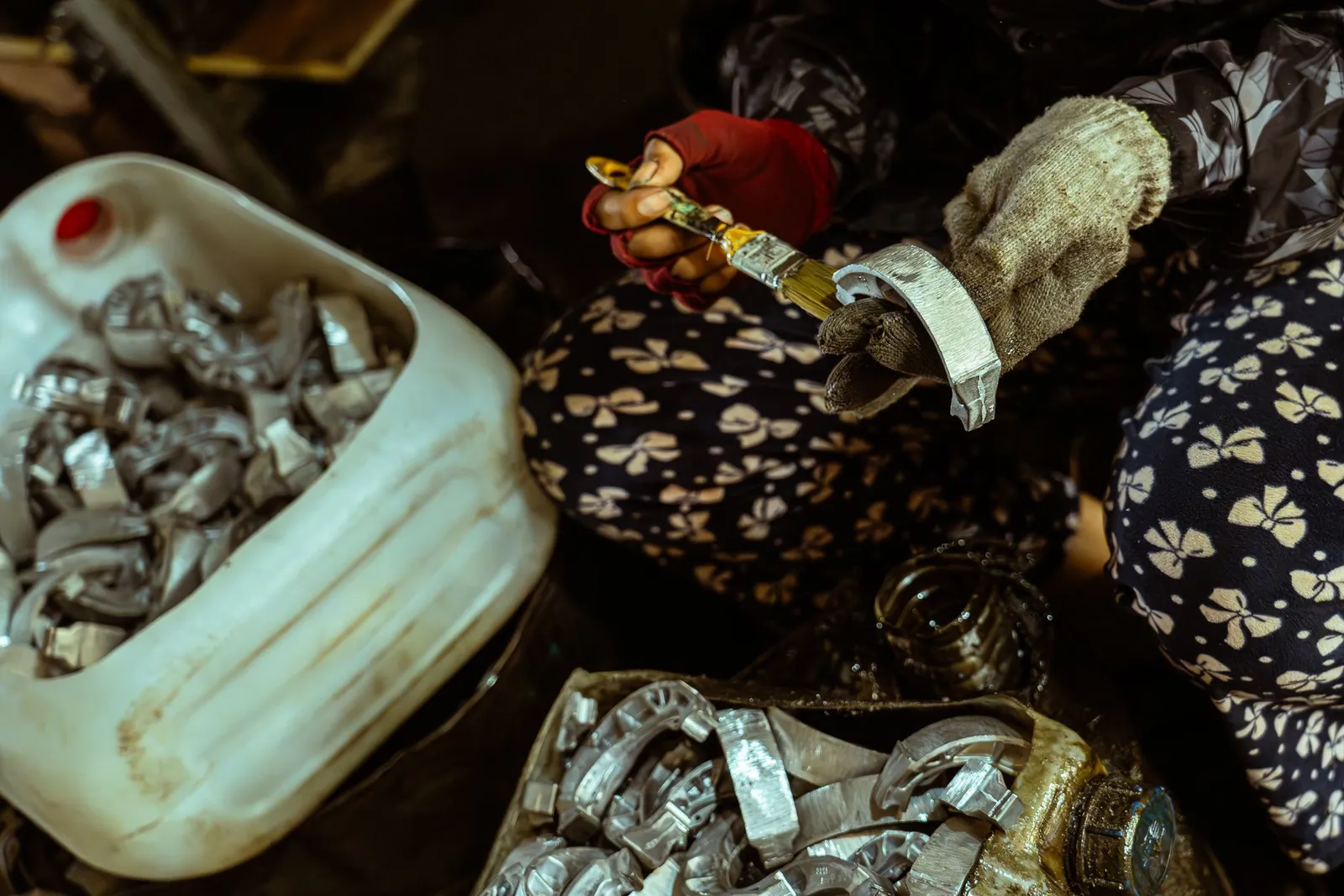
Coloured anodized aluminum: how colouring works
Coloured anodized aluminum owes its colour entirely to the porosity of the oxide layer. After anodizing, the open pores absorb an organic or inorganic dye, then sealing closes the surface and locks in the colour. This integration explains why an anodized finish resists scratches far better than paint applied to the surface.
Available colours range from black to bronze, including bright colours such as blue, red or gold. Their consistency depends heavily on the alloy, which is why the choice of grade, for example between a 6061 alloy for machined parts and a 5000 series sheet, is made early in the project.
Not sure whether to choose a decorative finish or a hard treatment for your components? Having a technical team validate the choice of alloy and treatment type at the design stage avoids costly rework and ensures the expected performance.
Choosing the right type of anodizing for the application
The right type of aluminum anodizing depends above all on the part's environment and the stresses it faces. Three main use cases stand out:
- Industrial and mechanical use: Type III protects parts subject to abrasion, repeated friction and thermal cycling.
- Aerospace use: Type I remains relevant when fatigue strength must be preserved and surfaces prepared for bonding.
- Architectural use: coloured Type II dominates, governed by the AAMA 611 specification for architectural anodized aluminum, which defines performance classes based on outdoor exposure.
This reasoning mirrors the choice of the materials themselves. Comparing options, as in this comparison of stainless steel and aluminum, helps align the substrate, surface treatment and budget. For a demanding project, custom aluminum anodizing tailors the thickness, colour and sealing to the part's actual constraints.
Conclusion
Aluminum anodizing is not a single finish but a family of treatments: Type I preserves fatigue strength, Type II protects and colours, Type III hardens against wear. Choosing the right process, thickness and alloy directly determines the service life of the part. For an industrial, aerospace or architectural project, having the requirements assessed by a team specialized in metal fabrication ensures a durable result that complies with current standards.
FAQ
What is aluminum anodizing and what is it used for?
Aluminum anodizing is an electrochemical process that thickens the metal's natural oxide layer to improve its corrosion resistance, wear resistance and appearance. Unlike paint, the layer is an integral part of the surface and does not peel. It is used as much to protect industrial parts as to colour architectural components or harden mechanical components subject to high stresses.
What is the difference between Type II and Type III anodizing?
Type II, performed in a sulfuric acid bath, produces a thin layer intended mainly for corrosion protection and decorative colouring. Type III, also called hardcoat or hard anodizing, is formed at low temperature with a higher current, resulting in a much thicker and harder coating. It is reserved for parts exposed to abrasion and intense mechanical wear.
Can anodized aluminum be coloured?
Yes. After the porous oxide layer forms, the pores absorb organic or inorganic dyes before the sealing step, which traps them. This produces stable colours such as black, blue, red, gold or bronze. The quality and consistency of the colour depend on the alloy, the film thickness and rigorous control of the bath throughout the treatment process.
Which aluminum alloys are best suited to anodizing?
Alloys in the 5000 and 6000 series, such as 5052 and 6061, deliver excellent results thanks to their favourable composition. Alloys rich in copper or silicon produce less uniform finishes and are poorly suited to hard anodizing. The choice of alloy should therefore be made at the design stage, taking into account the intended treatment type and the desired final appearance of the part.