With a technical drawing in hand, the question always comes back to the same point. Who can perform the CNC metal bending and cutting to the specified tolerances, in the required alloy, without sending the delivery schedule off track?
For a project engineer, choosing a CNC bending and cutting shop is about more than the price per part. It depends on the precision that can actually be achieved, compatibility with the specified stainless steel or aluminum, and the ability to deliver production runs without variation from one part to the next.
This article explains how CNC metal bending and cutting work, which tolerances are realistic for each alloy, and what truly affects lead times in an integrated fabrication shop.
What are CNC metal bending and cutting
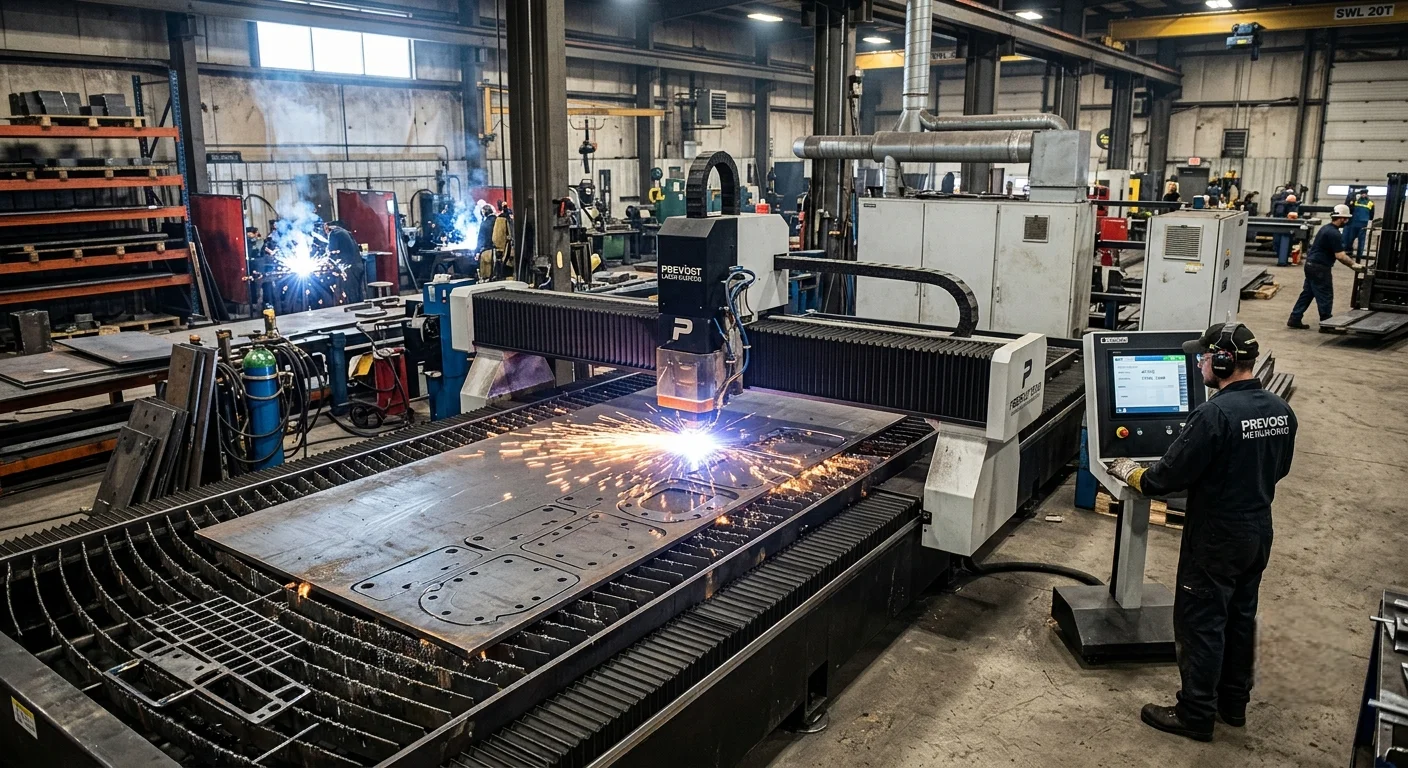
CNC bending of stainless steel consists of forming a flat sheet to a precise angle using a numerically controlled press brake. CNC cutting separates or profiles the sheet before or after bending, often by laser or punching.
Together, these two operations turn a raw metal sheet into a part that is ready for assembly. Numerical control makes it possible to repeat the same operation hundreds of times with minimal variation between parts, which is essential for industrial production runs.
Metal plate forming and rolling belong to the same family of processes. They create curves, flanges or tubular structures from a flat sheet according to the geometry required by the engineering drawing.
Typical steps for a bent and cut part
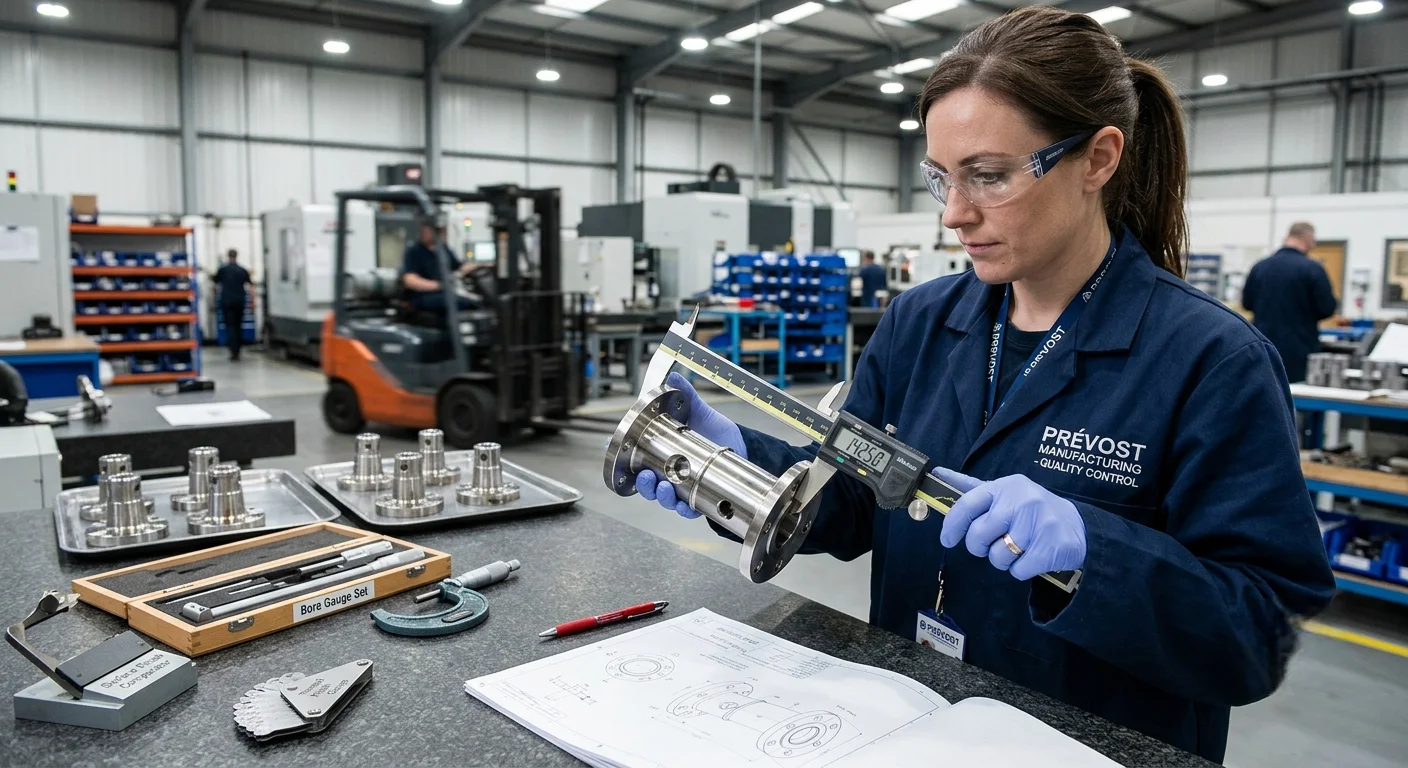
A part generally moves from tool-path programming based on the CAD file to cutting, bending, deburring and, finally, dimensional inspection. Each step is documented to provide the traceability industrial buyers require.
Alloys compatible with CNC bending and cutting
Metal behaviour during bending varies by alloy. A buyer comparing quotes should know that stainless steel, aluminum and duplex alloys do not respond to the press in the same way.
The following table summarizes the alloys most commonly bent and cut in industrial metal fabrication, along with their main characteristics.
| Alloy | Bending behaviour | Typical use |
|---|---|---|
| 304L stainless steel | Good balance of strength and formability | General industrial equipment |
| 316L stainless steel | More pronounced springback and better corrosion resistance | Food processing, pharmaceutical and wastewater |
| 5052 aluminum | Good formability and greater sensitivity to scratches | Lightweight structures and enclosures |
| Duplex 2205 and super duplex 2507 | Larger bend radii required | Severely corrosive environments |
The alloy selected directly affects the minimum bend radius, the required press force and the risk of cracking on tight bends.
Dimensional tolerances to allow for by alloy
Bending and cutting tolerances are not universal. They depend on the thickness, alloy and complexity of the part. Project engineers benefit from understanding these ranges before finalizing a drawing.
The following benchmarks are commonly observed in industrial CNC bending and cutting, as documented in recognised sheet metal bending design guidelines:
- Laser cutting of thin sheet: a typical tolerance of ±0.25 to 0.4 mm
- CNC bending of stainless steel: a typical angular tolerance of ±0.5 degrees under stable production conditions
- Parts with simple geometry: tighter linear tolerances than parts with multiple bends
- Aluminum and stainless steel require larger bend radii than mild steel to limit springback
These values remain indicative. A technical drawing with clearly specified tolerances is the only way to obtain a conforming part on the first attempt instead of leaving the shop to apply its default values.
Lead times and the factors that influence them
The quoted lead time for a CNC bending and cutting project rarely depends on a single factor. Part volume, metal thickness, the number of distinct bends and the availability of the requested finish all play a role.
A simple part in a small quantity may be completed in a few days. A production run involving several alloys, tight tolerances and a food-grade finish will require more planning and quality-control time.
Working with a shop that performs cutting, bending and assembly under one roof reduces delays associated with transporting parts between subcontractors. This is one of the advantages of an integrated model, where the part stays in the same shop between each step.
CNC bending and cutting or laser cutting: how to choose
These two processes are complementary rather than competing. Fibre laser cutting defines the outline and openings of the part, while CNC bending gives it its final three-dimensional shape.
For a flat part with no bends, cutting alone may be enough. For an enclosure, bracket or formed structure, both steps are generally required. The article on 4,000 W fibre laser cutting details the thicknesses and tolerances specific to that operation.
Want to confirm whether your part requires both processes? Request a free quote, and the technical team will assess the most efficient fabrication path for your project.
Certified welding and assembly after bending and cutting
A bent and cut part often needs to be assembled with other components. This is where weld quality becomes critical, especially for equipment subject to inspections or strict compliance standards.
Certification to CSA W47.1 sets the criteria for fusion welding of steel, with certification divisions based on the type of work performed. A CWB Division 2-certified manufacturer has qualified its supervisors, welding engineers and personnel according to this standard recognised by CWB Group.
In an integrated shop, bent and cut parts are assembled on site using certified TIG welding through the custom parts and welded assembly service, without involving an outside subcontractor.
How to start a CNC bending and cutting project
Most projects begin by sending a drawing or a description of the requirement. The technical team then validates the tolerances, alloy and volume before confirming a realistic lead time.
This process is similar to the one presented in the complete guide for industrial buyers, which explains how to structure a request for quotation to receive a prompt, accurate response.
What to prepare before requesting a quote
A CAD file or dimensioned drawing, the desired alloy, the expected volume and the critical tolerances allow the shop to provide a firm price more quickly instead of estimating based on assumptions.
Entrust CNC metal bending and cutting to an integrated shop
A successful CNC metal bending and cutting project is rarely a matter of chance. It depends on a well-chosen alloy, realistic tolerances and a shop that can deliver without multiplying intermediaries.
An integrated shop brings laser cutting, CNC bending, certified TIG welding and quality control together at one Laval facility, with a free quote provided within 24 to 48 hours. Request your quote today to receive a precise lead time for your CNC metal bending and cutting project.
FAQ
What tolerance can CNC metal bending and cutting achieve?
In CNC metal bending and cutting, a common angular tolerance is about ±0.5 degrees under stable production conditions, while linear tolerances vary with the thickness and complexity of the bend. Parts with simple geometry allow tighter tolerances than parts with multiple bends or deep-drawn features. A technical drawing that specifies these values prevents discrepancies with the shop.
What is the difference between CNC bending and laser cutting?
CNC bending forms sheet metal into a three-dimensional shape at a precise angle using a press brake. Laser cutting separates or profiles the flat sheet before bending. The two processes are often used together to produce a complete part, from its outline to its final shape, in the same integrated shop without an outside subcontractor, simplifying the tracking of each order.
How long does a CNC bending and cutting project take?
Lead time depends on the volume, number of bends and selected alloy. A simple part in a small quantity can be delivered in a few days. An integrated shop that performs cutting, bending and assembly under one roof generally reduces lead times compared with a model involving several separate subcontractors, while simplifying project tracking from the start through the end of production.