You have a drawing, a prototype, or an equipment concept, and you are looking for the right custom metal fabrication partner to turn it into a deliverable part. The Quebec market has dozens of shops, but they are not all equal. Choosing the wrong supplier means risking delays, rework, non-conformities, or worse, in-service failure.
This guide helps industrial buyers structure their approach: understand the steps of a custom metal fabrication project, identify the certifications that matter, compare quotes intelligently, and avoid common pitfalls when awarding a contract.
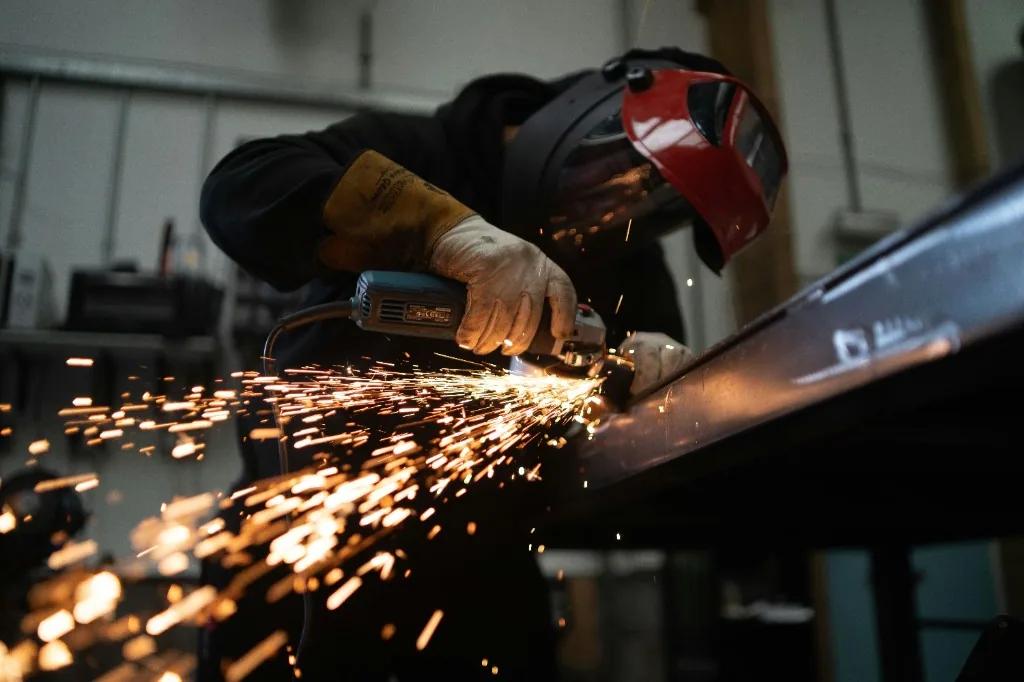
What custom metal fabrication means in Quebec
Custom metal fabrication covers the industrial processes that transform sheets, plates, profiles, or tubes into components, sub-assemblies, or complete equipment according to a client's unique specifications—distinct from standardized catalog parts.
A typical custom metal fabrication shop combines several processes under one roof:
- cutting (laser, plasma, waterjet, saw)
- bending and forming (CNC press brake, plate roll, section bender)
- welding (TIG, MIG, spot welding)
- mechanical assembly (bolting, riveting, fitting)
- finishing (polishing, brushing, passivation, painting)
- quality control and inspection
The most common materials in Quebec are stainless steel (304L, 316L, duplex), aluminum (3003, 5052, 6061, 5083), carbon steel, and more rarely titanium, bronze, or copper.
Steps in a custom metal fabrication project
A typical job unfolds in six phases. Understanding this sequence helps you anticipate lead times and focus your efforts as a buyer.
Phase 1: needs analysis and feasibility
The manufacturer reviews your drawings, specifications, and constraints. It validates technical feasibility, suggests design-for-manufacturability (DFM) optimizations, and flags potential issues.
Phase 2: quote and shop drawing preparation
Based on the validated file, the supplier issues a detailed quote. The best shops work in SolidWorks or AutoCAD and produce shop drawings that formalize fabrication details before production starts.
Phase 3: material procurement
Ordering the required sheets, plates, or profiles. Lead times vary with availability (24 hours for common 304L stainless, several weeks for specialized grades such as super duplex 2507).
Phase 4: production
Cutting, bending, welding, and assembly according to the planned sequence. Quality control happens continuously, not only at the end.
Phase 5: finishing and final inspection
Polishing, passivation, traceability marking, dimensional inspection, and required tests (leak testing, dye penetrant, radiography depending on sector).
Phase 6: delivery and installation
Appropriate packaging, transport, and in some cases on-site installation supervision.
Contact us for more information on any of these steps related to your project.
Certifications that set serious manufacturers apart
Not all certifications carry the same weight in custom metal fabrication. Here are the ones that truly matter by sector:
| Certification | What it guarantees | Sectors concerned |
|---|---|---|
| CWB W47.1 (CSA) | Structural welding per Canadian standards | Construction, structures, heavy equipment |
| CWB Division 2 | Higher-level welding certification | Critical projects, complex structures |
| ISO 9001:2015 | Documented quality management system | All demanding sectors |
| MAPAQ | Food-contact suitability | Food processing, beverages |
| FDA compliance | Food-contact compliance (United States) | Food exports to the United States |
| ASME Section IX | Welding procedures for pressure vessels | Petrochemical, pharmaceutical, energy |
CWB Division 2 combined with ISO 9001 is a strong indicator of operational maturity for demanding industrial projects. The Canadian Welding Bureau publishes an up-to-date list of certified companies.
How to compare quotes intelligently
Unit price tells only part of the story. Here are the criteria that truly change the value received:
- Actual shop capacity: overhead crane, laser power, maximum part size
- Depth of the planning department: ability to model, optimize, support
- In-house certified welders rather than subcontracted work
- Material traceability complete with EN 10204 3.1 certificates
- Realistic, met lead times backed by references
- Financial stability for recurring contracts
According to a manufacturing supply chain brief published in Magazine MCI, 90% of Quebec manufacturers experience supply chain disruptions, pushing buyers to build lasting relationships with qualified local suppliers rather than chasing the lowest bidder on every job.
Industries that rely most on custom fabrication
Some sectors rely almost entirely on custom metal fabrication because their equipment is not available off the shelf. In Quebec, the main ones include:
- Pharmaceutical: tanks, transitions, polished stainless process equipment
- Food processing: conveyors, hoods, food-grade structures
- Water treatment: lamella clarifiers, vortex units, basin structures
- Aerospace: aluminum components and specialty alloys
- Pulp and paper: lamellas, ducts, heat-resistant equipment
- Construction: architectural stainless structures, stairs, guardrails
Each sector imposes its own standards, finishes, and traceability requirements. A strong manufacturer understands your target industries before the first call.
Mistakes to avoid when choosing a supplier
Three traps come up constantly among first-time buyers.
First trap: choosing on price alone. A quote 15% cheaper that omits passivation, traceability marking, or material certificates often costs more in rework and non-conformities.
Second trap: ignoring engineering capacity. A shop without 3D planning forces you to supply complete, validated drawings, shifting design risk onto you. A partner with 3D planning services absorbs part of that risk.
Third trap: underestimating communication. One technical contact from quote to delivery is far better than a chain of messages between five people.
Conclusion
Custom metal fabrication is an investment that goes well beyond unit price. The right partner combines relevant certifications, suitable production capacity, sector expertise, and communication discipline. Taking time to seriously qualify two or three suppliers before the first job avoids most problems industrial buyers encounter.
To discuss your next stainless steel or aluminum project and get a feasibility analysis, contact us. Our team has supported industrial buyers since 1992, from shop drawing to delivery.
FAQ
How much does a custom metal fabrication project cost in Quebec?
The cost of a custom metal fabrication project varies with geometric complexity, material grade, thickness, number of operations (cutting, bending, welding, finishing), and order quantity. The same volume produced in a series generally costs 30% to 60% less per unit than a one-off prototype. The best approach remains a detailed quote based on drawings or a precise description of the need.
What is the typical lead time for a custom fabrication project?
A standard project is generally delivered within 2 to 8 weeks after shop drawing approval, depending on complexity and material availability at the supplier. For simple parts in common stainless, some shops deliver in just 24 to 48 hours. Complex projects such as pharmaceutical tanks or architectural structures typically require 8 to 16 weeks of combined planning and production.
Do you need complete drawings to get a quote?
No, it is not necessary. A sketch, sample, photo, or even a written description can be enough for an initial technical feasibility review. Experienced manufacturers have a planning department capable of turning an intent into a shop drawing. The more precise the information provided (material, dimensions, tolerances, finish, quantity), the more accurate and faster the quote will be.