A custom stainless steel guardrail is designed according to the Quebec Construction Code: a height of 1070 mm in commercial settings, openings that will not allow a 100 mm sphere to pass through, a grade chosen for the exposure and stainless steel fasteners. The visible finish and the anchors ensure safety and durability.
A poorly executed institutional staircase is noticed right away. A poorly designed custom stainless steel guardrail, on the other hand, costs you later: pitting corrosion, loose fasteners, non-compliance flagged at inspection. In a commercial or institutional project, these exposed architectural elements are both a safety requirement and a visual signature.
Stainless steel checks both boxes. It combines mechanical strength, longevity and a clean look that ages well. Each component still has to be designed according to the right rules: code-required heights, spacing, grade selection and the quality of the joints. Here is how to approach such a project methodically.
Why choose a custom stainless steel guardrail
On a commercial job site, exact dimensions, angles and anchor points are rarely standardized. A custom stainless steel guardrail follows the actual geometry of the building rather than forcing the space to fit a prefabricated module. The result is cleaner and safer.
The practical advantages of stainless steel for these exposed elements:
- Durability: several decades of service with minimal maintenance.
- Corrosion resistance superior to that of ordinary steels: an advantage explained in detail in this article on stainless steel corrosion resistance.
- Neutral architectural look that blends with glass, wood or concrete.
- Easy maintenance: periodic rinsing is enough in most cases.
- Fully recyclable material at the end of its service life.
These qualities explain why stainless steel dominates demanding projects, as shown by these examples of stainless steel structures in architecture.
Designing to the Quebec Construction Code
Compliance comes before everything else. Guardrails, railings and handrails are governed by the Building chapter of the Quebec Construction Code, which adopts the National Building Code. The values vary depending on the building's use.
Code-required heights
In commercial and institutional settings, a guardrail is generally 1070 mm high, compared with about 900 mm in residential buildings. The handrail is usually located between 865 and 965 mm above the stair nosing. These benchmarks are detailed by CAA-Quebec for guardrails and handrails.
Spacing and infill
Guardrail openings must not allow a 100 mm sphere to pass through, to prevent a child from slipping through. This criterion guides the choice of infill: vertical balusters, glass panels or tensioned cables. Each solution must remain compliant and non-climbable, depending on the municipality.
Choosing the right grade for the exposure
The choice of grade determines the service life of the installation. It all comes down to one alloying element, molybdenum, which sets 316 apart from 304 and improves resistance to chlorides, as explained in this comparison of 304 and 316 stainless steel.
| Grade | Exposure | Advantage |
|---|---|---|
| 304 stainless steel | Indoors, dry environment | Excellent performance-to-price ratio |
| Marine-grade 316 | Outdoors, de-icing salts | Good resistance to chlorides |
| 316L (low carbon) | Seaside, pool, saline environment | Protected welds, the benchmark for aggressive environments |
Indoors, 304 is perfectly suitable. As soon as de-icing salt, chlorine or sea air is present, 316 is the way to go. At the seaside, 316L remains the standard because it also protects the welded areas, which are often the first to corrode.
Preparing a project and torn between two grades or two types of infill? Have the design and material selection validated by an engineering team before fabrication begins.
Visible finish, fasteners and welds
On an exposed element, every detail shows. The finish and the joints make the difference between a polished result and a sloppy one.
The visible finish
The finish affects both appearance and maintenance. A brushed finish hides signs of wear well, while a mirror finish enhances the high-end look but requires more care. The choice should be planned early, as this guide on stainless steel surface finishes points out.
Fasteners and welds
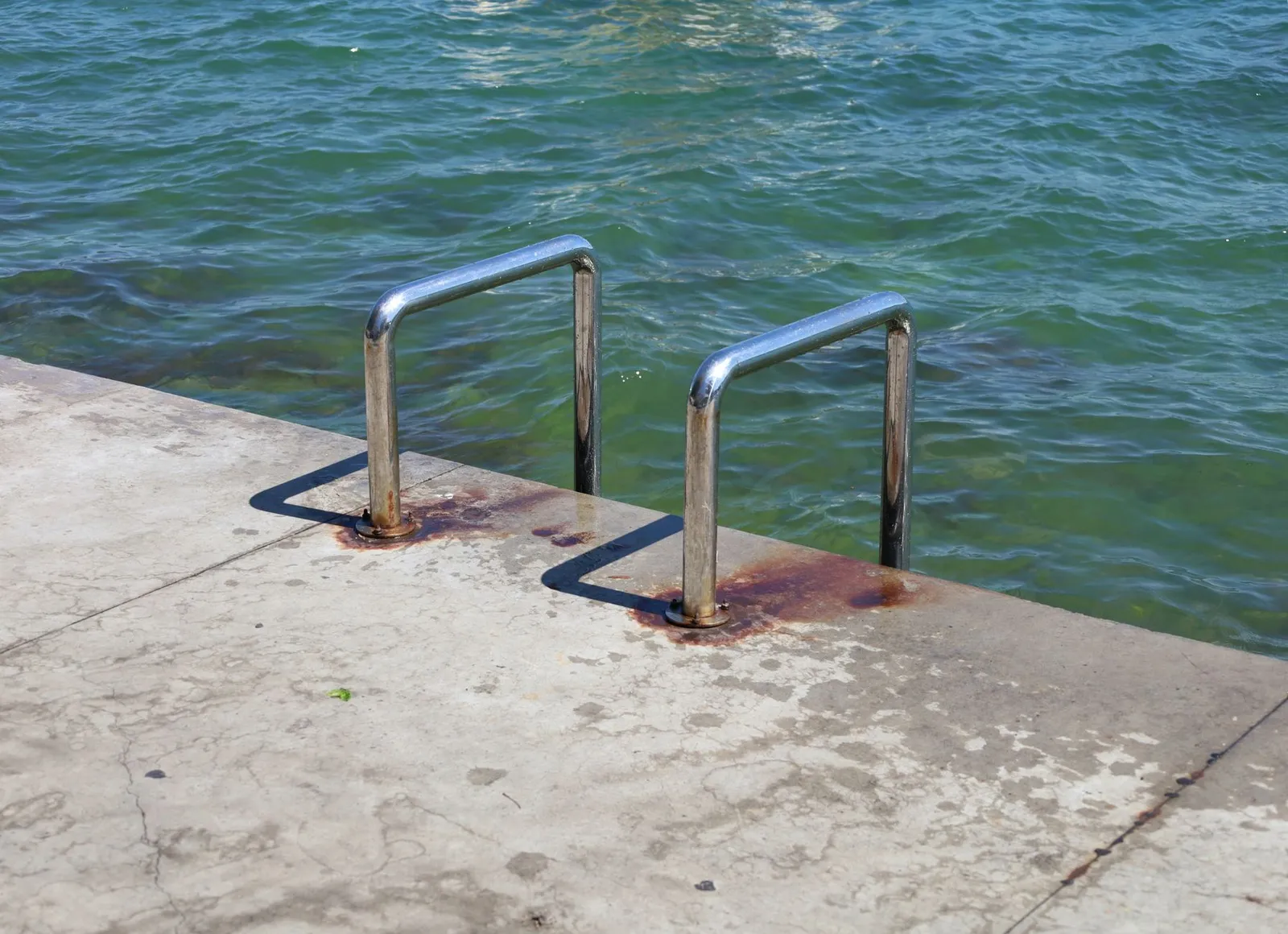
Fasteners must belong to the same stainless steel family as the structure to avoid galvanic corrosion. Exposed welds must be uniform and properly passivated. CWB-certified welds ensure the mechanical strength of posts and anchors subjected to horizontal loads.
Compliant, accessible railings and handrails
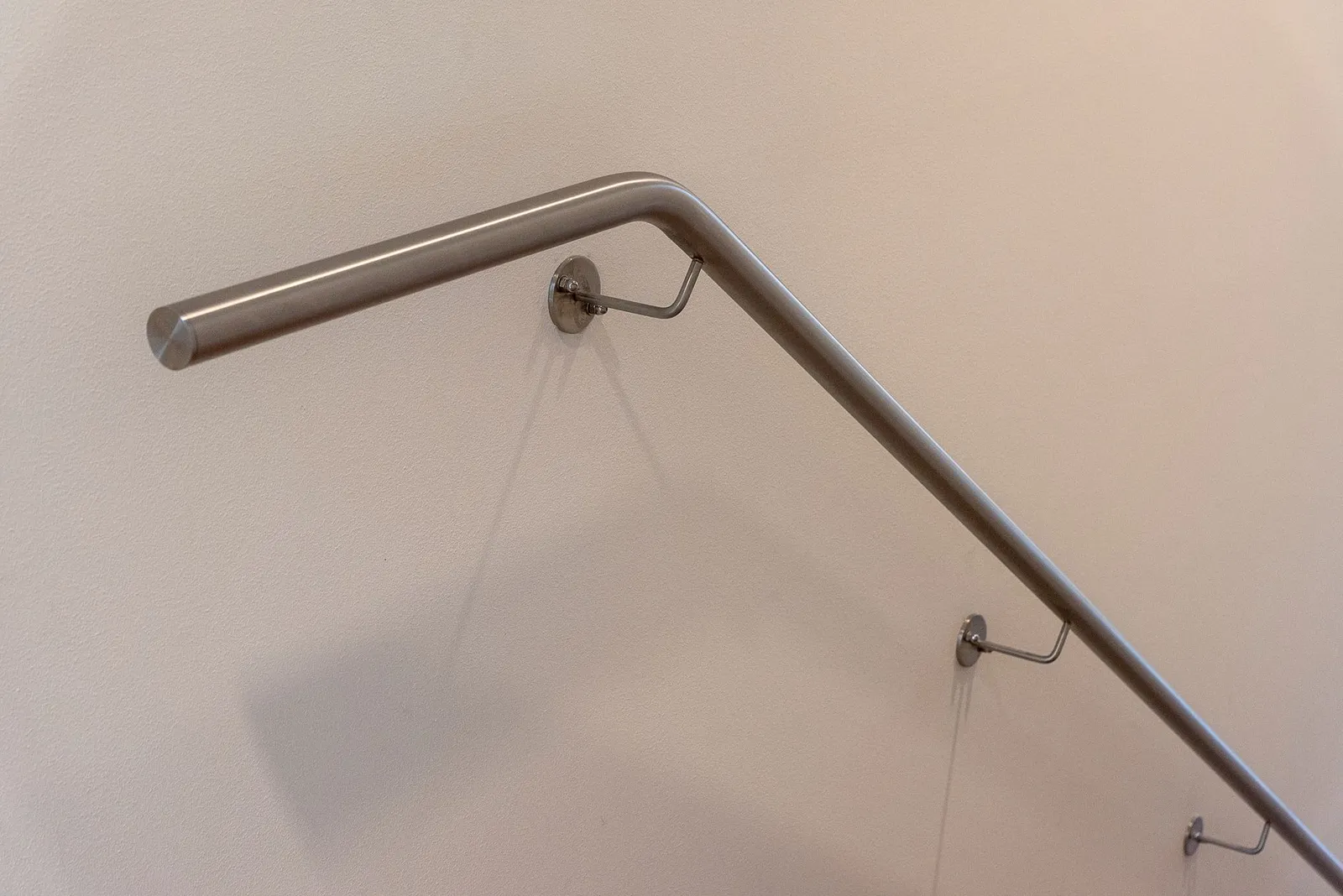
A railing is not just a decorative object: it is a safety support. The diameter and shape of the handrail must provide a firm, continuous grip with no sharp edges. Profile continuity matters as much as height.
Universal accessibility imposes requirements for public buildings: handrails extended at the ends, a comfortable grip and visual contrast. A custom stainless steel guardrail makes it possible to adjust these extensions and connections precisely, where a standard product forces compromises.
Conclusion
A custom stainless steel guardrail successfully combines code-compliant safety, longevity and architectural appeal, provided four points are mastered: compliance with the Code, choosing the grade based on exposure, the visible finish and the quality of fasteners and welds. These decisions are made upstream, starting at the modelling phase. For a commercial or institutional project, have your drawings validated by a team specialized in metal fabrication before launching production, to obtain durable, compliant elements that are true to your concept.
FAQ
What is a custom stainless steel guardrail?
A custom stainless steel guardrail is a safety assembly designed and fabricated to the exact dimensions of a project, rather than being assembled from standard modules. Posts, handrail, infill and fasteners are adapted to the architecture, the exposure and the requirements of the Construction Code. This approach ensures a perfect fit, a careful finish and strict compliance with the building's code-required heights and spacing.
Which stainless steel grade should be used for an outdoor guardrail?
The choice depends on the exposure. For indoor use, 304 stainless steel offers excellent value for money. Outdoors, as soon as de-icing salt, chlorine or prolonged moisture is present, grade 316 becomes preferable thanks to molybdenum, which limits pitting corrosion. At the seaside or near a pool, weldable 316L is the benchmark for preserving the strength of exposed joints over the long term.
What height must a commercial guardrail meet in Quebec?
In commercial and institutional buildings, a guardrail is generally 1070 mm high, compared with about 900 mm in single-family homes. Openings must prevent a 100 mm sphere from passing through so that a child cannot slip through. The handrail is usually located between 865 and 965 mm. These values are for guidance only: the local version of the Code must always be confirmed with the authority having jurisdiction.