Poorly designed equipment for food-processing stainless steel fabrication costs more than repairs. It can expose a company to a recall, production shutdown or non-compliance during an inspection.
For a plant manager, food-grade stainless steel equipment must meet precise requirements that go well beyond the choice of metal. Surface finish, welding method and supplier traceability matter just as much as the alloy.
This article explains what food-processing stainless steel fabrication actually involves, what hygiene standards require, and how an integrated shop meets these criteria.
Why food-processing stainless steel fabrication requires this grade
Stainless steel dominates food equipment fabrication because it resists corrosion, withstands frequent washing, and does not transfer taste or odour to the food it touches.
304L and 316L are the most widely used grades. Thanks to its molybdenum content, 316L offers better resistance to aggressive cleaning products and saline environments, making it a frequent choice for direct food-contact surfaces. The 304L vs 316L comparison details the differences between these two alloys.
Food grade does not refer only to the alloy. It also covers the surface finish, the absence of retention areas, and how easily the entire part can be cleaned.
What distinguishes a food-grade surface
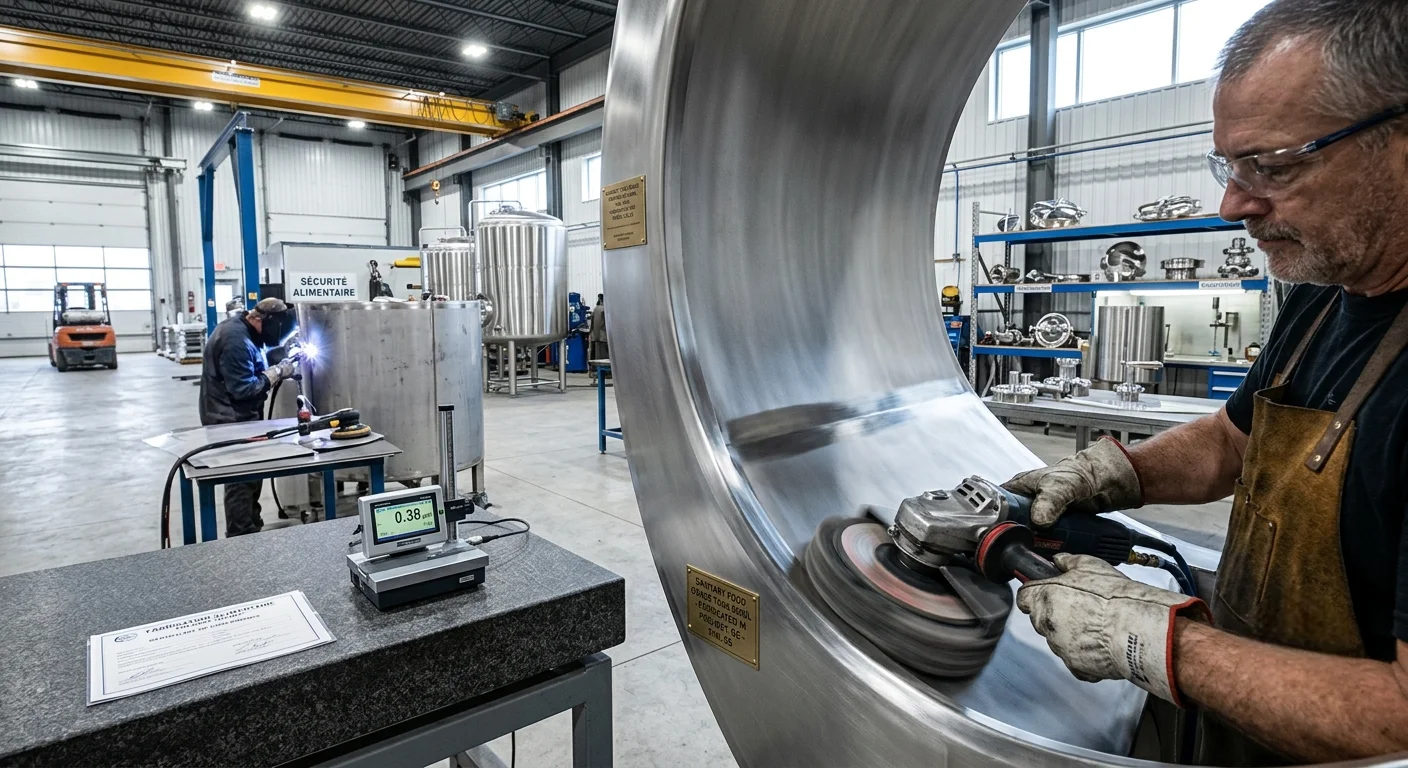
A food-grade surface must be smooth, with no crevices or gaps where residue can accumulate. Hygienic design standards recognised in the industry specify that a food-contact surface should have a roughness of no more than 0.8 micrometres Ra, a requirement documented by sanitary standards recognised in North America.
Hygiene standards and regulatory requirements
In Quebec, equipment fabricated for food processing falls within the requirements of the Ministère de l’Agriculture, des Pêcheries et de l’Alimentation. The ministry outlines good practices and hygiene and sanitation standards applicable to food establishments and their equipment.
These requirements include hygiene principles for all food-contact equipment, along with expected cleaning and sanitizing procedures. Equipment designed without these principles in mind can quickly become a weak point during an inspection.
The following elements are most frequently checked on food-processing equipment:
- Smooth, continuous surfaces without sharp corners or retention areas
- Full welds that are ground and polished rather than merely fused
- No non-food-grade materials in contact with the product
- Easy disassembly for cleaning and inspection
- Alloy and supplier traceability documentation
A manufacturer familiar with this sector incorporates these criteria when first reviewing the drawing instead of discovering them during an inspection after the equipment has been installed. This foresight avoids costly rework once the part is in place on the production line.
Food-grade finishes and polishing
Polishing food-processing equipment has one specific objective: eliminating the microscopic roughness where bacteria can settle. A coarse brushed finish is not sufficient for a direct food-contact surface.
The following table summarizes common finishes and their typical uses in food-grade stainless steel fabrication.
| Finish type | Approximate roughness | Typical use |
|---|---|---|
| Standard brushed | Greater than 0.8 µm Ra | Structures and non-food-contact surfaces |
| Sanitary polished | 0.8 µm Ra or less | Vessels, conveyors and direct-contact surfaces |
| Electropolished | Less than 0.5 µm Ra | Highly demanding environments, pharmaceutical and sensitive food applications |
The finish selected depends on the degree of food contact and the washing frequency required by the process.
Why retention areas should be avoided on food-processing equipment
A sharp corner, poorly fitted flange or incomplete welded joint creates an area where wash water can stagnate. These areas encourage bacterial growth even in an environment that is cleaned regularly according to standard protocols.
Food-grade equipment design must therefore account for cleaning at the drawing stage instead of correcting these defects after commissioning. Generous bend radii at intersections and sufficient slope for drainage are among the choices that simplify long-term maintenance.
Sanitary welding: why certification makes a difference
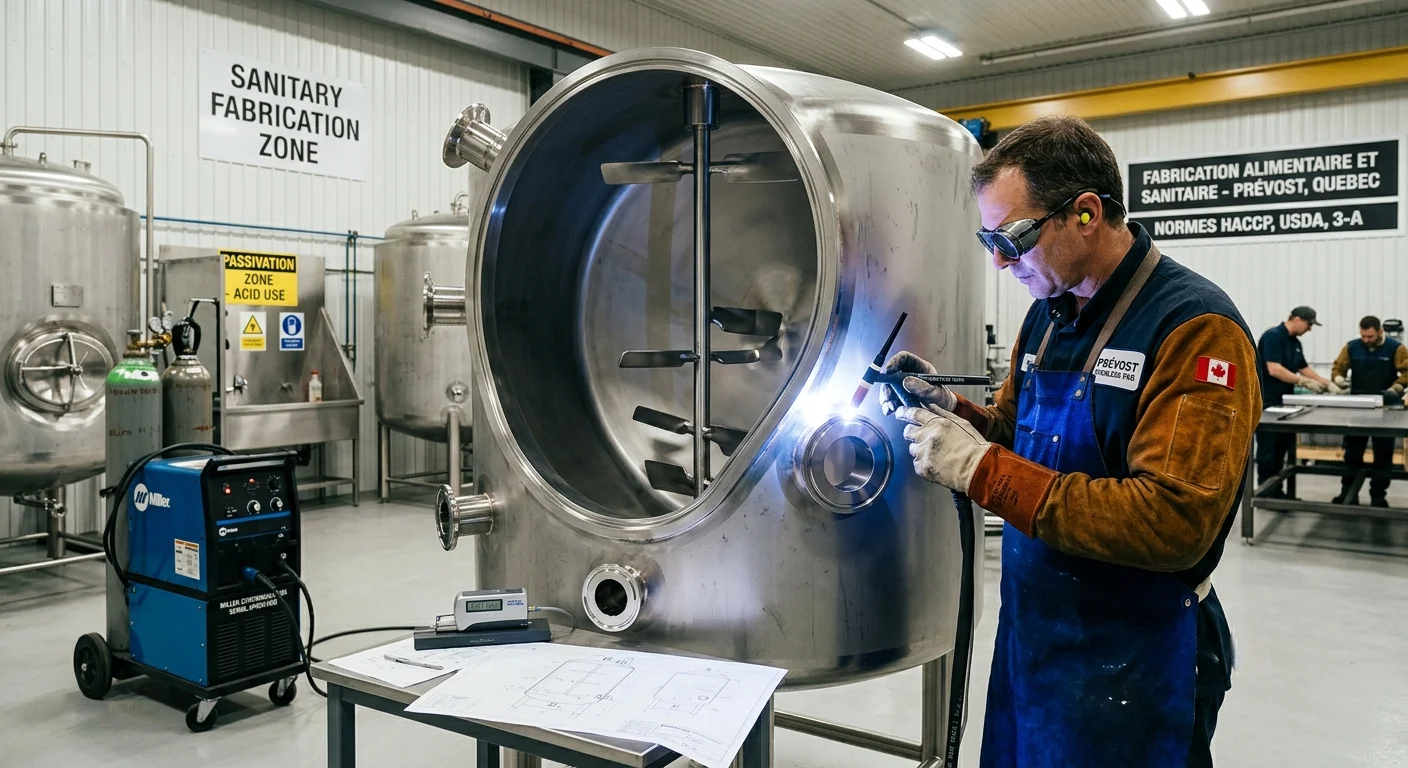
A poorly executed weld becomes a retention area that may be invisible to the naked eye. Crevices, porosity or incomplete welds trap moisture and residue even after a complete wash.
Certification to CSA W47.1, administered by CWB Group for fusion welding of steel, ensures that welding supervisors and personnel have been qualified according to independently verified criteria.
For food-processing equipment, a certified sanitary weld means a continuous bead that is ground and polished, with no visible porosity, rather than a simple apparent fusion point.
Planning equipment that must meet these criteria? Discuss your project with the technical team to validate the required finishes and certifications before fabrication begins.
Use cases: equipment fabricated for food processing
An integrated shop has completed more than 2,500 custom metal fabrication projects, including transitions, vessels and structures designed for food-processing lines with the sanitary finishes required by this sector.
These projects share requirements with pharmaceutical fabrication, where material grades and weld cleanliness meet equally rigorous standards, as shown in the article on stainless steel fabrication for the pharmaceutical industry.
This combined food and pharmaceutical expertise allows the shop to apply the same rigorous standards regardless of sector, simplifying matters for a plant manager overseeing several production lines with different requirements.
What plant managers benefit from documenting before fabrication
Production volume, washing frequency, cleaning chemicals and the type of food being processed directly affect alloy and finish selection. Communicating these factors during the first discussion with the shop avoids costly adjustments during fabrication.
From food-processing stainless steel fabrication to compliant equipment
Well-designed food-processing stainless steel equipment combines a suitable alloy, a verifiable sanitary finish and certified welding instead of adapting a generic assembly after the fact.
This equipment is fabricated in an integrated Laval shop with CWB and ISO 9001 certifications and direct expertise in food-processing industry requirements. Request a free quote for your next sanitary equipment project.
FAQ
Which stainless steel should be chosen for food-processing fabrication?
304L and 316L are the most widely used alloys in food-processing stainless steel fabrication. More resistant to corrosion thanks to molybdenum, 316L is often preferred for surfaces in direct contact with acidic or salty products. The final choice depends on the process, type of food, washing frequency and cleaning chemicals.
What is a sanitary finish in food-processing fabrication?
A sanitary finish is a polished surface smooth enough to prevent residue buildup and make cleaning easier. Direct food-contact surfaces generally target a roughness of 0.8 micrometres Ra or less, a requirement documented by recognised hygienic design standards and checked regularly during plant inspections, in addition to internal audits performed on site.
Why does certified welding matter in food-processing fabrication?
An uncertified weld may contain invisible porosity or crevices where residue accumulates despite regular equipment cleaning. CWB certification to CSA W47.1 ensures that welding personnel have been qualified according to verified criteria, reducing the risk of retention areas on finished equipment and facilitating compliance inspections in food-processing plants.