Custom titanium fabrication involves machining, welding and forming Grade 2 or Grade 5 titanium parts to precise tolerances. It serves the aerospace, medical, marine and chemical sectors, where titanium's strength-to-weight ratio and corrosion resistance make all the difference.
Few materials attract as much interest in industrial fabrication as titanium. Exceptionally lightweight, yet with strength that rivals steel, it appeals to engineers whenever a project combines an aggressive environment, weight constraints and high reliability requirements.
Getting the most out of this metal, however, takes real expertise, which is what custom titanium fabrication is all about. The choice of grade, welding precautions and machining strategy determine the final quality. This guide covers the common grades, the processing challenges and the applications where titanium becomes essential.
Why titanium stands out for custom parts fabrication
An outstanding strength-to-weight ratio
Titanium's main advantage lies in its strength-to-weight ratio. For comparable strength, a titanium part weighs significantly less than a steel part, making structures lighter without sacrificing strength. This advantage explains its place in aerospace, where every gram saved counts.
Grade 5 takes this logic further. Thanks to its aluminum- and vanadium-rich composition, the Ti-6Al-4V alloy achieves high mechanical strength while retaining the lightness characteristic of the metal.
Exceptional corrosion resistance
When exposed to air, titanium spontaneously forms a thin protective oxide layer. This passivation gives it remarkable resistance to chlorides, seawater and many acidic environments.
Where carbon steel rusts and some stainless steels suffer pitting corrosion, titanium holds up over the long term. The physical properties of titanium make it a durable choice for process equipment exposed to severe conditions.
Common titanium grades: Grade 2 and Grade 5
Two grades dominate the production of custom titanium parts in Quebec. The choice depends on the project's priority: formability and chemical resistance on one side, structural strength on the other.
- Grade 2 titanium (commercially pure): excellent formability, good weldability and superior corrosion resistance in aqueous and chlorinated environments. It is used in heat exchangers, piping and process components.
- Grade 5 titanium (Ti-6Al-4V): high mechanical strength and stiffness, ideal for structural and aerospace parts as well as implants.
The choice between Grade 2 and Grade 5 titanium comes down to the application. This comparison of Grade 2 and Grade 5 details the trade-offs between strength, formability and chemical resistance.
Machining and welding titanium: the challenges to master
What machining titanium requires
Machining titanium requires suitable parameters. The metal is a poor conductor of heat, which concentrates temperatures at the cutting edge and accelerates tool wear.
Moderate cutting speeds, a steady feed rate, generous coolant flow and rigid fixturing limit heat buildup and preserve dimensional accuracy. Careful setup also reduces the risk of vibration, which compromises surface finish.
Welding titanium under a protective atmosphere
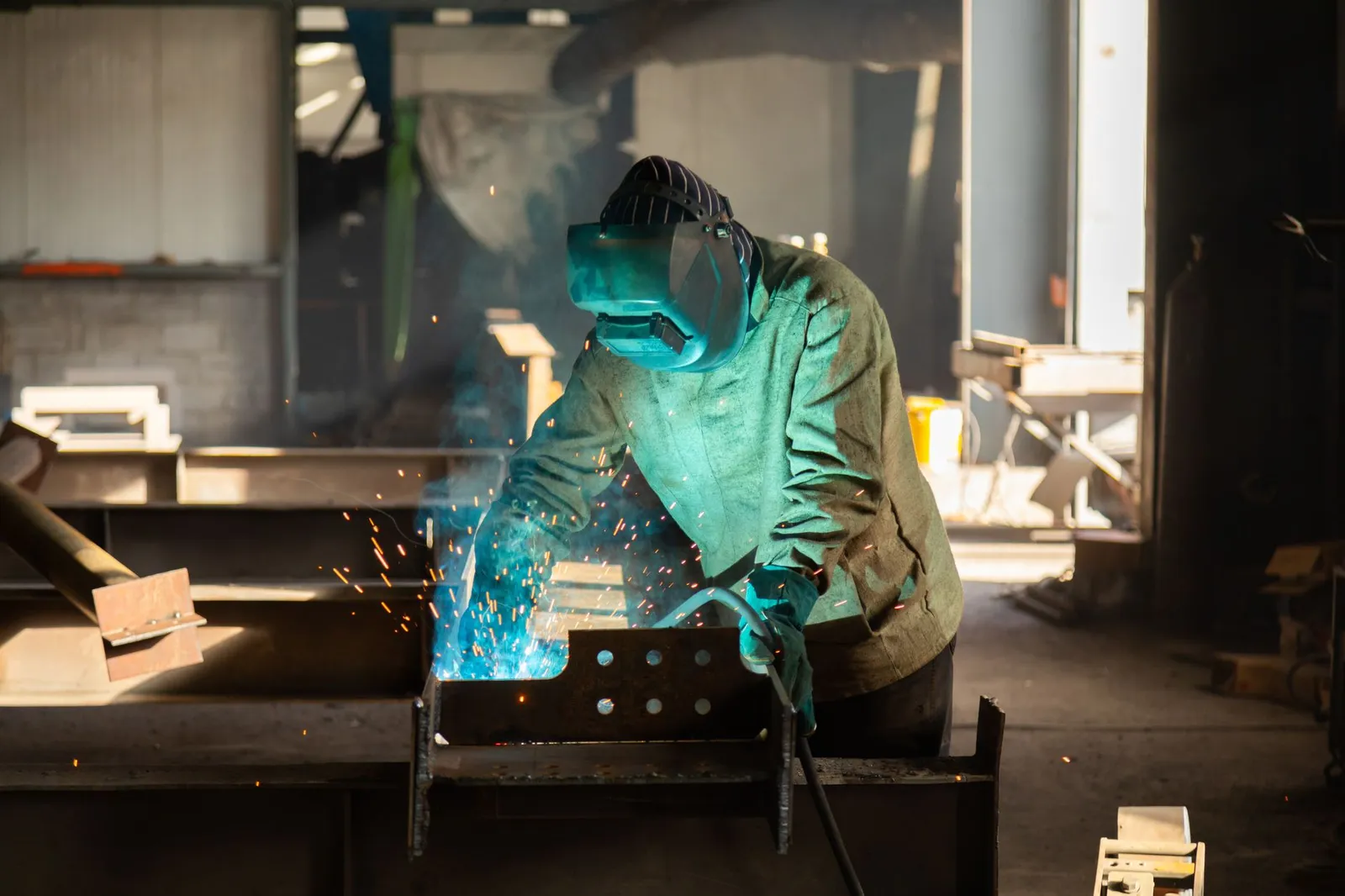
Welding is the most delicate step with titanium. At high temperatures, the metal readily absorbs oxygen, nitrogen and hydrogen from the air, which embrittles the joint and causes it to lose ductility.
The process is therefore carried out under high-purity argon shielding, protecting both the face and the root of the weld. According to titanium welding best practices, gas shielding must be maintained until the part temperature drops below approximately 425 °C.
The colour of the weld bead reveals the quality of the work: a bright silver bead is sound, while straw, blue or grey tints indicate contamination. Controlling welding distortion complements this requirement on complex assemblies.
Planning a titanium project for a demanding environment? Have your grades, tolerances and certification requirements validated by a metal fabrication team before finalizing your drawings.
Titanium, stainless steel or super duplex: how to choose
Titanium is not always the best answer. Depending on budget and environment, stainless steel or duplex alloys sometimes offer a better compromise. The table below summarizes the most common selection criteria.
| Criterion | Titanium (Grades 2 and 5) | 316L stainless steel | Super duplex 2507 |
|---|---|---|---|
| Strength-to-weight ratio | Excellent | Average | Good |
| Chloride resistance | Very high | Moderate | High |
| Weight | Lightest | High | High |
| Material cost | Highest | Lowest | High |
| Weldability | Demanding (argon) | Easy | Moderate |
| Typical uses | Aerospace, medical, marine | Food, pharma | Water, chemical |
When chloride resistance is the priority but the budget is tight, super duplex 2507 and duplex 2205 alloys are a credible alternative to titanium.
Demanding applications for custom titanium fabrication
Custom titanium fabrication targets components where failure is not an option. Four sectors clearly stand out in Quebec:
- Aerospace: structures, fasteners and engine parts that require lightness and fatigue resistance.
- Medical: orthopedic implants, surgical instruments and prostheses, thanks to titanium's biocompatibility.
- Marine and subsea: equipment continuously exposed to seawater, where corrosion would quickly ruin other metals.
- Chemical: heat exchangers, columns and reactors in contact with aggressive media.
For these critical applications, traceability and what ISO 9001 certification guarantees matter as much as the part itself. A documented custom parts service secures every step, from raw material to final inspection.
Conclusion
Custom titanium fabrication opens the door to lightweight, robust and durable components, provided the choice of grade, machining and welding under a protective atmosphere are properly mastered. Grade 2 excels in chemical resistance, Grade 5 in mechanical strength, and every demanding sector finds what it needs.
Before launching your next titanium project, have your drawings, tolerances and certification needs assessed by an experienced metal fabrication team to secure the outcome from the start.
FAQ
What is custom titanium fabrication?
Custom titanium fabrication covers the machining, welding and forming of titanium parts designed to precise specifications. The fabricator selects the appropriate grade, meets the required tolerances and documents material traceability. This approach targets critical components in the aerospace, medical, marine and chemical sectors, where every part must combine lightness, mechanical strength and long-lasting corrosion resistance.
What is the difference between Grade 2 and Grade 5 titanium?
Grade 2 titanium is commercially pure titanium, valued for its formability and corrosion resistance in aqueous and chlorinated environments. Grade 5, the Ti-6Al-4V alloy, contains aluminum and vanadium, which gives it significantly higher mechanical strength. Grade 2 is chosen for forming and chemical resistance, and Grade 5 for high structural loads.
Why does titanium welding require a protective atmosphere?
At high temperatures, titanium absorbs oxygen, nitrogen and hydrogen from the air, which embrittles the joint and causes it to lose ductility. Welding is therefore performed under high-purity argon, with shielding on both the face and the root maintained during cooling. The colour of the bead reveals the quality: a silver bead is sound, while a blue or grey tint indicates contamination.
Is titanium better than stainless steel for a marine project?
It all depends on the specifications. Titanium offers exceptional seawater resistance and reduced weight, which appeals to critical naval and subsea applications. Stainless steel and super duplex, however, remain more economical and are sufficient for many uses. Titanium becomes the clear choice when lightness, service life in chloride environments and reliability justify a higher initial investment.